
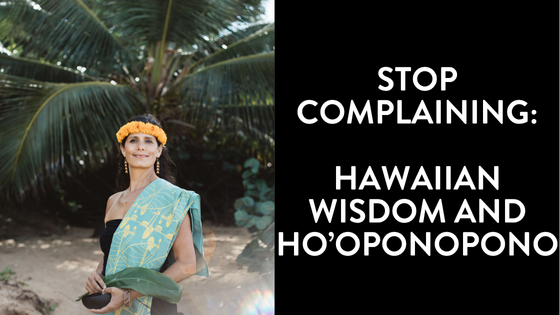
Stop Complaining: The Hawaiian Path to Healing and Harmony
Complaining.
We’ve all done it. Maybe occasionally. Weekly. Daily. Maybe so often that it’s become a way of life without even realizing it. But Hawaiian culture offers a powerful perspective rooted in Ho’oponopono and emotional health—a practice that teaches us how to bring our spirit, thoughts, and actions back into alignment. These are ancient tools for healing, and part of a broader Hawaiian wisdom for stress and disharmony that invites us to restore balance through intention, energy, and language.
Aia ke ola i ka waha – Life is in the mouth
Aia ka make i ka waha – Death is in the mouth
1. The Hidden Cost of Complaining
Complaining is more than just venting. It’s defined as the expression of dissatisfaction or annoyance about someone or something. In Hawaiian teachings, it’s seen as a low-vibrational communication that spins a web of disharmony. Every time we speak in complaint, we create energetic dissonance in our relationships, our environment, and our own bodies.
Science backs this up. Complaining releases cortisol—the stress hormone linked to anxiety, depression, and even memory loss. The hippocampus, the part of the brain that stores memory, shrinks over time when we stay in repetitive negative thought patterns. Complaining quite literally rewires our brain to think more negatively in the future.
As my Kumu, Auntie Mahilani Poe Poe, would say: “Where your thoughts go, energy flows.” When you complain, you send energy down a dark tunnel—and the more you do it, the easier it becomes to find yourself stuck there.
2. The Illusion of Blame
When we feel annoyed, irritated, or on edge, we often point the finger at someone else. “She’s so annoying.” “He’s putting me on edge.” “That’s so irritating.”
But here’s the reframe we invite through the practice of Ho’oponopono:
- Is she annoying—or are you annoyed?
- Is someone putting you on edge—or do you have an edge that needs to be softened?
Ho’o is a word of action. Pono describes harmony, balance, wholeness, rightness and being complete. In short, Ho’oponopono means to make right, more right.
At a recent Lomi Lomi workshop, one of our students shared just such a moment. They were frustrated by another participant’s behavior and vented, “She’s just so irritating.” But through the process of Ho’oponopono (to make right), we invited her to turn inward and ask: What is it within me that is being stirred?
Through self-reflection and breathwork, she came to understand that the other person’s behavior reminded her of an unresolved wound from childhood. It wasn’t about the other person at all. This was her opportunity to heal something within. That shift brought tears, and eventually peace.
When we have blocks, resistance, past traumas that are obscuring the path, the way isn’t open. It’s tempting to think it’s someone else who is obstructing the path. We might blame others for the way that we’re feeling.
We can blame our shortcomings and past situations for why we’re not moving forward. The truth is, we have power to unravel ourselves from the web of disharmony that’s been created.
It’s up to us to decide to take action and Ho’oponopono is all about action. The practice of Ho’oponopono is not just a cultural tradition—it is a powerful tool for achieving emotional health. By inviting us to take personal responsibility and realign ourselves with the Divine, Ho’oponopono and emotional health are intimately connected. This practice allows us to clear the energy of unresolved emotions, promote forgiveness, and shift into greater harmony with ourselves and others.
3. Complaining Creates Separation
Complaining keeps us in the role of the victim. It projects the idea that others are out to get us, annoy us, or harm us. But often, the people we complain about have no idea they’ve done anything at all.
Worse, complaint is contagious. When we voice our dissatisfaction to others, especially those who cannot help us solve it, we pull them into a negative feedback loop. This energy is draining. It creates disharmony. It fractures community. And it pulls us further from the solution.
Instead, Hawaiian teachings ask us to return to Pono—balance and alignment—and take full responsibility for how we show up. Not blame. Not shame. Just honest observation and willingness to shift.
This is a key example of Hawaiian wisdom for stress. Rather than pushing through or numbing discomfort, these teachings offer us ways to move through challenge with grace. Whether it’s through bodywork, breathwork, or realigning our words and thoughts, the Hawaiian path invites restoration from within.
4. What to Do Instead: Speak Life
If “life is in the mouth,” then we have the power to speak life into our relationships, our work, and our personal healing. That begins with gratitude and solution-oriented thinking.
When someone brings a concern to our retreat community, we always ask: Can you also bring a solution?
This shift calls in divine support. It makes us active participants in our healing, rather than helpless victims of our circumstance. And when we live from this space of openness and gratitude, we create new neural pathways. Practice thoughts and actions that help us build stronger relationships, self-acceptance, and compassion.
Try this:
- Who do I need to forgive today?
- What is an action I could take to restore harmony?
- Give 5 mahalos – things I am grateful for today.
That’s the co-creative energy we seek when working with spirit. That’s the power of Lomi Lomi.
5. Gentle Growth: A New Way Forward
Life is an evolution of spirit. There is no perfection, only practice. We will be annoyed sometimes. We will stumble into complaint. But Hawaiian wisdom invites us to notice when we’ve strayed from our alignment and return to Aloha with gentleness.
So, ask yourself today: Are you giving your power away through negative speech? Or are you willing to speak words that create harmony?
Let this be the moment you flip the script.
6. Your Invitation to Learn More
If this message resonates with you—if you want to learn the deeper teachings of Lomi Lomi, Hoʻoponopono, and how to live in alignment with spirit—we invite you to join us on Maui for a Lomi Lomi retreat in 2025.
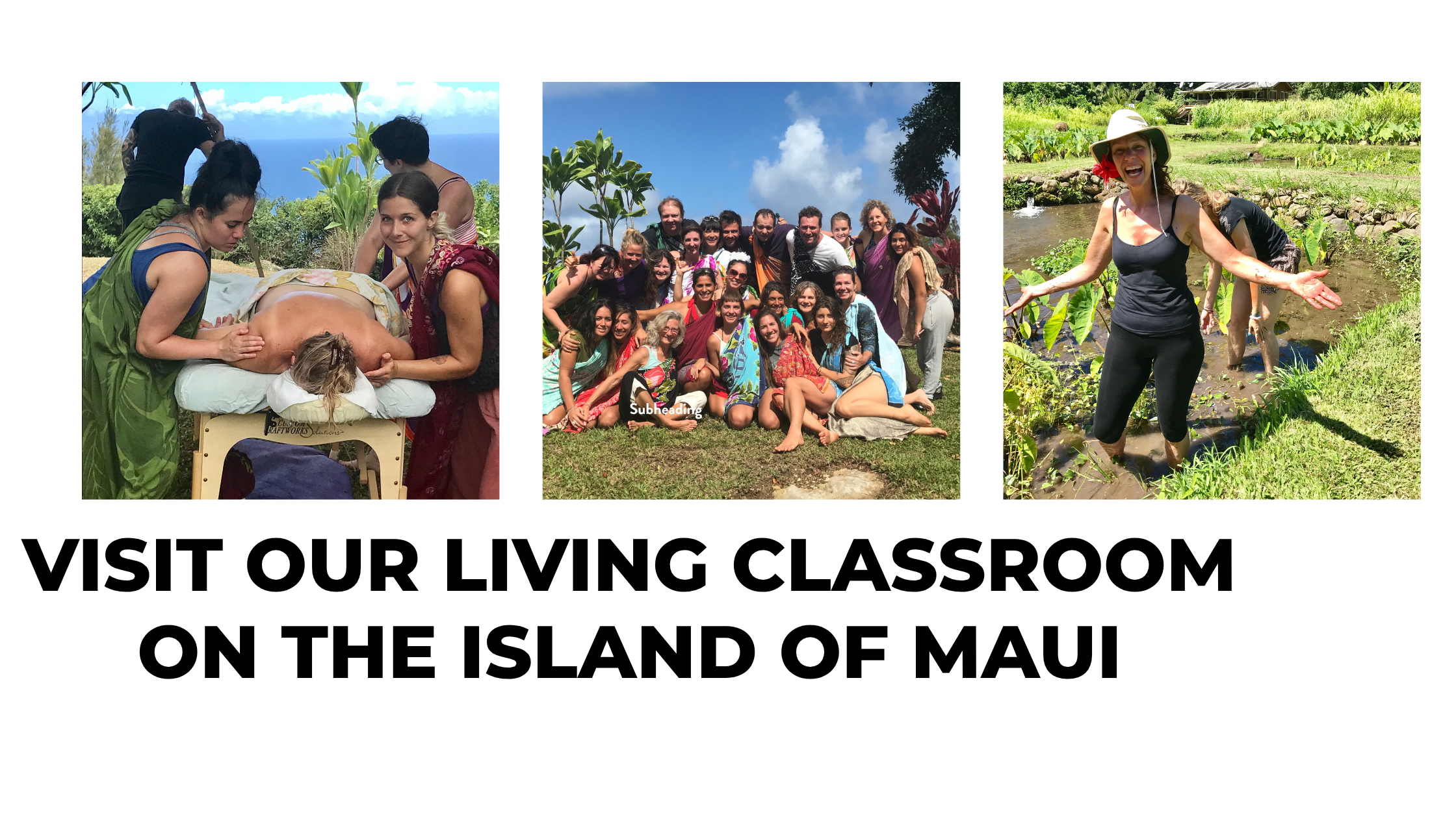
These retreats are transformational. You’ll learn sacred Hawaiian bodywork, visit ancient sites, and step into a healing lineage grounded in Aloha.
🌺 See all of the upcoming workshops here: www.LearnLomiLomi.com
Together, we wrap the arms of Aloha around the world.
Aloha and a hui hou.
Kumu Jeana


2 thoughts on “lomi-lomi-hooponopono-emotional-health”
Workshop retreats
Aloha Elaine,
I would love to see you in class!
You can find all the details about our upcoming workshops at this link:
👉 https://hoomanaspamaui.com/our-classes/
With Aloha ❤️